he 2012 Champions League semi-final at Camp Nou still lingers. Chelsea, down to ten men and trailing 2-0 on the night, clawed back through Ramires and Fernando Torres to eliminate Barcelona. That night wasn't an anomaly—it was the culmination of a decade-long tactical duel that defined a generation of European football. The fixture has always been more than a match;it's a clash of footballing ideologies.Barcelona's possession game, built on quick passing and positional rotation, often pinned Chelsea deep. Pep Guardiola's side averaged over 70% possession in their meetings between 2009 and 2012, yet Chelsea's compact 4-4-2 or 4-3-3 mid-block forced turnovers in wide areas. Jose Mourinho's first spell at Chelsea laid the blueprint: aggressive pressing in midfield, targeted fouls to disrupt rhythm。and rapid transitions through Didier Drogba. The 2005 and 2006 ties were ugly, controversial, and utterly effective. As a neutral, you either loved the chaos or hated it—there was no middle ground.The individual battles added spice. Lionel Messi never scored against Chelsea in eight appearances—a statistical quirk that baffled analysts. John Terry's red card in 2012。Andres Iniesta's stoppage-time equalizer in 2009, Tom Henning Ovrebo's refereeing disaster—these moments burned into memory. What often gets overlooked is how Chelsea's full-backs, Ashley Cole especially, handled Messi's inverted runs. Cole's positioning was almost always a yard ahead, forcing Messi wide and denying the central lane. That detail rarely appears in highlight reels but decided entire ties.
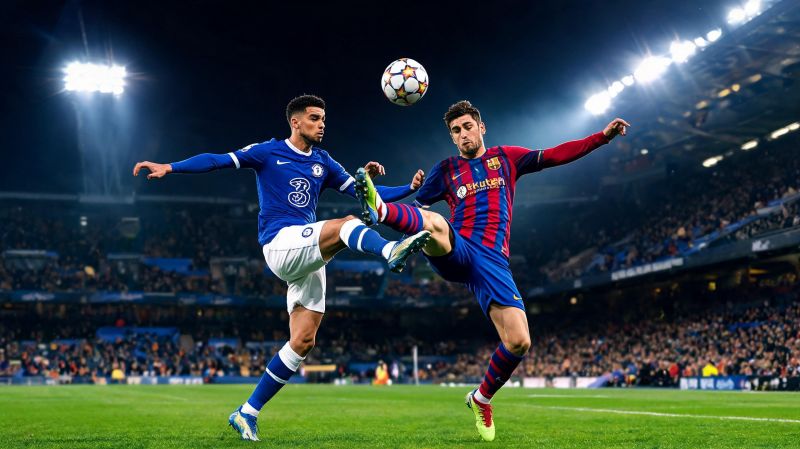
Modern Chelsea under Thomas Tuchel approached Barcelona differently. The 2021 Champions League round of 16 wasn't a tactical slugfest but a controlled demolition. Chelsea's 3-4-2-1 pressed Barcelona's build-up relentlessly, with Mason Mount and Timo Werner cutting off passing lanes to Sergio Busquets. Barcelona, transitioning from Xavi's return as manager, lacked the vertical threat to punish Chelsea's high line. The 4-1 aggregate score flattered Barcelona—Chelsea could have scored six. That tie marked a shift: Barcelona's tiki-taka no longer intimidated;it invited pressure.Financial realities now shape the rivalry as much as tactics. Barcelona's well-documented financial constraints have forced reliance on academy graduates。while Chelsea's post-Roman Abramovich era under Todd Boehly has seen massive spending on young talent. The 2023-24 squads illustrate the divergence: Barcelona fielding Lamine Yamal and Gavi, Chelsea banking on Enzo Fernandez and Moises Caicedo. Whether these investments translate into European dominance remains uncertain, but the chess match continues. One thing hasn't changed—when Chelsea and Barcelona meet, expect drama, controversy, and a tactical lesson. That's been the fixture's signature since 2000, and it shows no sign of fading.